SIT Programme Manager heads to Africa to research world’s rarest mammal
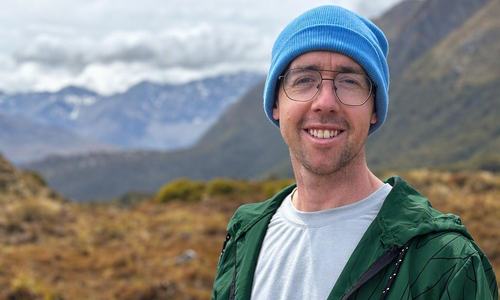
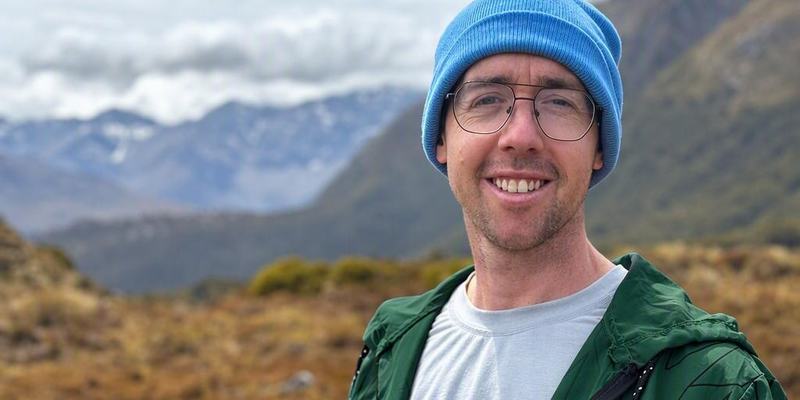
Southern Institute of Technology (SIT) Environmental Management Programme Manager, Jordon Traill, is departing soon on a research expedition to a remote African rainforest to look for proof of the world’s rarest mammal, Miss Waldron’s red colobus monkey.
Mr Traill explains West Africa’s Upper Guinea Forest is a global biodiversity hotspot, much like New Zealand.
“The Upper Guinea Forest rainforest is home to lots of unusual and wonderful species like chimpanzees, forest elephants and pygmy hippos, many of them threatened by extinction as the forests are cleared.”
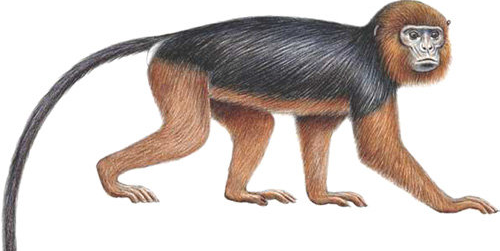
One of the biggest mysteries of this forest is the existence, or loss, of Miss Waldron’s red colobus monkey. Having eluded scientists since the early 2000s, when it was last known to have been sighted, it has not been seen or heard since.
While some experts believe it may already be extinct, “which would mean it’s the first primate species to go extinct in recent times”, Mr Traill says others believe that if there is a population of the monkey alive, there is only one final place to search for it.
“There is a small forest on the border of Côte d'Ivoire and Ghana called Tanoe-Ehy.”
It is this mystery that is taking Mr Traill to West Africa as part of an international research team searching for the elusive primate.
Mr Traill says the mystery remains unsolved partly because the forest is so difficult to penetrate. “People struggle to move through it, while the monkeys can easily spot and avoid humans.”
“With traditional survey methods, the monkeys may have heard people approaching and hidden from researchers.”
However, due to technological advancements such as AI, Mr Traill says researchers now have more tools for the conservation and protection of nature. “Now surveying for threatened species can be done in many different ways and analysed with the help of AI and machine learning.”
The new technology allows scientists to place audio-recording devices in the forest over weeks, with AI tools used to detect the various noises the forest makes.
“This advancement means we can continuously survey over a longer time without the impact of human presence possibly changing animal behaviour.”
In 2024, the research team collected hundreds of hours of data in a preliminary study, and with the help of AI tools, Mr Traill was able to verify many of the sounds of the forest.
“We heard lots of unusual noises, although none were a potential match for the monkey we are searching for, but from that information we detected areas of the forest with far higher biodiversity – not surprisingly the parts of the forest which were hardest to access.”
This time, the team will undertake broadscale surveys to capture the whole forest for conservation purposes, alongside targeted surveys in those remote and difficult-to-reach locations.
The team is made up predominantly of researchers from the Ivory Coast, alongside researchers from Australia and Mr Traill. The audio-recording survey is being led collaboratively by the three.
The expedition begins on November 16, 2026, with the team spending two months on-site, making weekly excursions into the forest.
“Many parts of the forest are flooded so we will be sleeping in specialised rock-climbing tents which we will attach to trees in order to stay overnight as there is no dry ground.”
All the data is expected to be collected by the end of January, with Mr Traill beginning the process of putting it through AI tools on his return.
“The expedition is about more than a single species. The forest is home to many rare species of mammals and birds. The recording devices can provide important information needed to guide future conservation efforts for all species in the forest.”
“Whether we find Miss Waldron’s red colobus monkey or not, the data will contribute to a much better understanding of one of Africa’s most threatened ecosystems.”
The journey is a rare opportunity for Mr Traill to combine scientific research, conservation and adventure. He freely admits he prefers to be “hiding in the forest, looking for monkeys rather than talking about it”.
And nearby Fiordland has been a great training ground for the keen hiker.
“Exploring Fiordland’s dense forests has hopefully helped to prepare me for the impenetrable forests of the Ivory Coast.”
There is something very inspiring, he says, about walking through forests that few outsiders have visited and using conservation tools that are becoming commonplace in New Zealand to help illuminate the conservation mysteries that remain.
At SIT, the expedition has also become a valuable talking point with Mr Traill’s students. “Some of the students at the school think I’m a bit unconventional and predict the next thing I’ll be looking for are woolly mammoths and moa.”
The project has provided opportunities in his classes to explore the role of research and uncertainty in understanding the world around us. There is still much that is unknown, with new species being recorded every year while many others are approaching critical threat levels and the brink of extinction.
“I think it’s inspired a few students to think big and view the world where knowledge isn’t completely fixed or concrete.”
Mr Traill says people are often surprised to hear just how much remains unknown about the natural world. A monkey lost to science was rediscovered in the Congo in 2012, while earlier this year a new species of monkey was discovered, again in the Congo Rainforest.
This leaves open to Mr Traill the tantalising possibility that the animal his team is searching for is still there.
“I suspect somewhere in the tangle of branches of this hidden forest a small population of Miss Waldron’s red colobus survives. But until we look, and listen, we simply do not know.”
Study Environmental Management at SIT.
Follow SIT